
It is almost ten years since the countries that share the marine resources of East Africa first collaborated on an initiative to certify the professionals who work in and manage marine protected areas (MPAs). In that time, the Western Indian Ocean Certification of MPA Professionals (WIO-COMPAS) programme has certified over 80 professionals from six countries, offering them valuable recognition for their knowledge and experience and, in many cases, launching or advancing their careers.
Lead assessor for the WIO-COMPAS programme, Lawrence Sisitka, is quick to point out that WIO-COMPAS is not a training course but a certification programme that allows MPA professionals to achieve accreditation for proven on-the-job experience. To illustrate the value of the WIO-COMPAS programme, Sisitka − who is affiliated to the Environmental Learning Centre at Rhodes University in South Africa − uses the example of a candidate, Viktor Baba, from Madagascar:

“This candidate had almost no formal education,” relates Sisitka. “He started off as a terrestrial ranger and was moved to a MPA when he was in his forties. Through his own endeavours and commitment he learned everything he could about his job in the MPA and he came through the assessment and achieved certification. And I thought, ‘that’s it! That’s what WIO-COMPAS is all about’.”
Some of the original reasons for establishing the WIO-COMPAS programme include a general lack of understanding about MPAs within conservation agencies and governments in the western Indian Ocean (WIO) region, a lack of dedicated MPA personnel, and a lack of career planning for MPA professionals. Further motivation was provided by an increase in pressure − both legal and illegal − on marine resources and the fact that, in some instances, MPAs in the WIO region are not adequately managed.
WIO-COMPAS is a joint initiative of the Western Indian Ocean Marine Science Association (WIOMSA) and the Coastal Resources Centre at the University of Rhode Island, with initial, speculative funding from USAID. It was launched in 2008, with the first certification event taking place in Mombasa, Kenya in that year. Since then, 16 assessment events have been held and 82 individuals have been certified as “MPA-Pros”, a term that recognises these individuals have the competence to effectively perform their tasks in MPA management. Some MPA Pros have been certified on more than one level.
The WIO-COMPAS programme has been endorsed by the IUCN World Commission on Protected Areas, the global conservation organisation, WWF, the Game Rangers Association and the International Federation of Rangers. WIOMSA has also signed memoranda of understanding to facilitate the incorporation of WIO-COMPAS into the human resources policies of the Kenya Wildlife Service and CapeNature, a prominent conservation agency in South Africa.
A strong proponent for the WIO-COMPAS programme is Arthur Tuda of the Kenya Wildlife Service, who is certified as a MPA-Pro Levels 2 and 3 and today serves as an assessor for the programme.
“Being certified under the WIO-COMPAS programme marked a major turning point in my career,” says Tuda who attended the first WIO-COMPAS certification event in Kenya in 2008.
“Since then I have remained an active leader in MPA affairs in Kenya and within the WIO region. Today, I oversee more than 2 500 square kilometers of critical marine habitats and apply what I have learned as an MPA-Pro to take on the challenges of managing expansive conservation areas with limited resources and personnel. As a MPA-Pro, I constantly try new ideas, improve strategies and work to keep my staff motivated. I also share my MPA Pro-certified expertise every day by mentoring my colleagues and other MPA staff across the WIO region.”
WIO-COMPAS offers three levels of certification, with each level addressing a unique set of skills that contribute to the effective management of MPAs. For instance, Level 1 targets rangers, officers and marine field operators who perform practical duties such as habitat management activities, engaging communities and enforcing laws. Level 2 is for professionals with supervisory responsibilities, such as MPA managers, wardens or section leaders, and Level 3 targets professionals involved in higher-level management, strategy, planning and policy development beyond the boundaries of individual MPAs, and sometimes across borders.
Sisitka says that at all three levels, the certification process is thorough and, at times, arduous.
“My favourite feedback from an evaluation came from a candidate from Mafia Island in Tanzania, who said ‘this thing can kill you!’” laughs, Sisitka, “it is tough and nobody knows how tough it is until they have been through it, but then people respect themselves for coming through it.”
The process itself begins with an application that asks candidates for initial evidence of their knowledge and skills in the competence areas (there are 56 competencies for Level 3, 66 for Level 2 and 44 for Level 1). The applications are assessed by an assessor who makes a recommendation about whether the candidate should be invited to attend the certification event, or whether they require more evidence of their competencies before they undertake the certification process. The assessor’s role is to guide, mentor and support people through the assessment process, so if a prospective candidate doesn’t make the cut, they get clear reasons and practical advice about the areas in which they need to build their skills and experience. And, they are encouraged to apply again.
“The door is never closed,” says Sisitka seriously.
Candidates bring a portfolio of evidence to the assessment events that take place over four or five days. They are mentored through the assessment process by the assessors, with one assessor allocated to no more than three or four candidates.
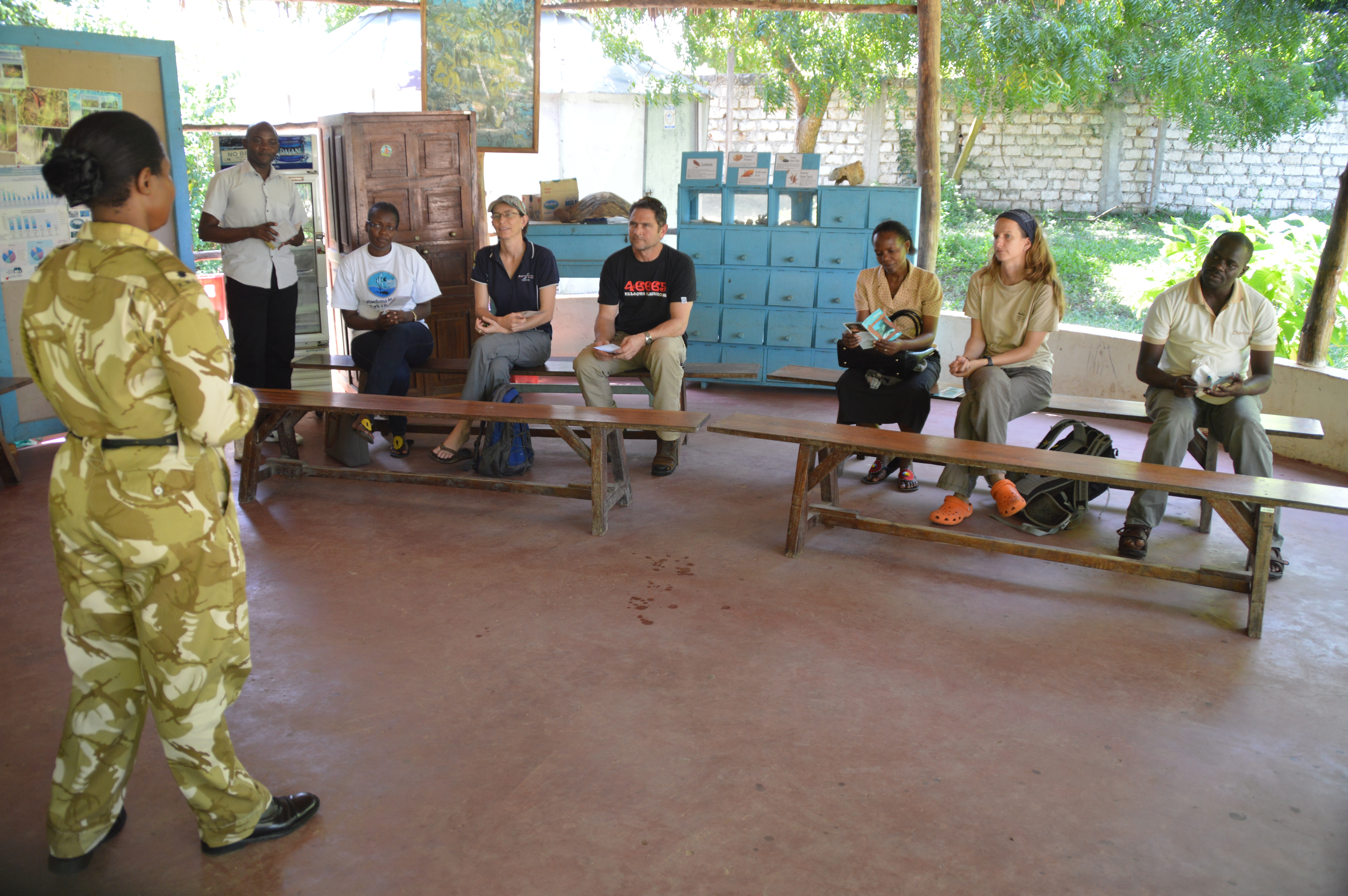
“Its all about providing opportunities for the candidates to present evidence of their competencies,” explains Sisitka. “In between there are professional development sessions, such a field trip or a speaker. So it’s a very, very intense process.”
To achieve certification, candidates are required to score 70 percent overall, and over 60 percent in each of the competence areas. Candidates who don’t achieve certification are asked to re-apply in two years and they’re all, whether successful or not, given professional development advice.
Another MPA-Pro who has qualified at both level 2 and 3 is Peter Chadwick of South Africa. And, like his colleague in conservation, Arthur Tuda, Chadwick now offers his skills and experience to WIO-COMPAS as an assessor.
“WIO-COMPAS has certainly focused my attention on where my strengths and weaknesses lie in conservation, and has helped to improve my own capabilities,” says Chadwick. “The value of its network building and strengthening of collaborative effort cannot be over-stressed. It is through improving our individual capabilities and working as a team across the WIO region that we will be able to ensure improved conservation status for the critically important marine and coastal environment upon which so many depend.”
Asked whether WIO-COMPAS has achieved its ultimate goal of contributing to the improved management of MPAs across the WIO region, Sisitka says that although the programme does not have firm evidence of its impact, anecdotal evidence suggests it is on the right track.
“The MPA professionals themselves would say that it has improved their performance but we haven’t actually tied it to a management effectiveness tracking process,” he says, adding that the impact of WIO-COMPAS would be become apparent over a long-term period and a ripple effect would be to strengthen conservation in general.
“For example, we could lose certified MPA-Pros to the terrestrial field and that’s fine, because they take their skills and understanding with them.”
Well-known South African conservationist, Kerry Sink, who is certified at Level 3, testifies to the broad reach of WIO-COMPAS when she credits the programme with helping her to prepare ambitious protected area plans which are being implemented in South Africa through through Operation Phakisa, the presidential initiative that aims to unlock the country’s ocean economy.
“WIO-COMPAS’ comprehensive coverage of key MPA aspects − including planning, social considerations and stakeholder engagement − helped balance my skill sets,” says Sink, “being able to network with a diverse and capable set of practitioners has been invaluable and through this network I have accessed new information, insights and problem solving approaches.”
Just like a compass is used to navigate and orientate, so WIO-COMPAS is providing direction and guidance to the men and women who are working in MPAs across the WIO region, helping them to do their jobs better and in-so-doing raising the profile of MPAs and helping to retain skills and experience where they are needed most.